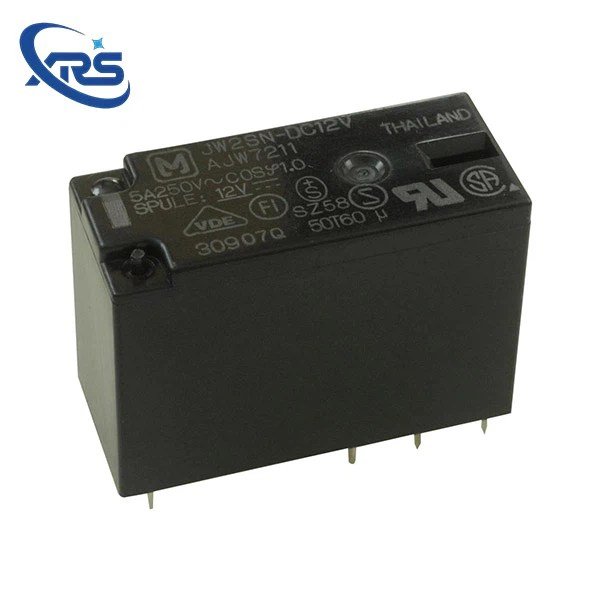
The Unsung Heroes of Modern Control: Decoding the Applications of Double Pole Double Throw Relays
In the intricate dance of modern electronics and electrical systems, some components operate quietly behind the scenes, yet their impact is profound. Among these workhorses, the Double Pole Double Throw (DPDT) relay stands out as a particularly versatile and powerful actor. These seemingly simple electromechanical switches are the silent enablers of complex control, allowing everything from a car engine to a life-saving medical device to function with precision and reliability. Understanding the myriad applications of Double Pole Double Throw relays isn't just about learning their technical specifications; it's about appreciating how they bridge the gap between low-power control signals and high-power operational demands across countless industries.
Imagine a single command triggering multiple actions, or a system gracefully switching between two completely different power sources. That's the DPDT relay at its finest—a robust decision-maker within your circuits, orchestrating power and signal flow with dependable mechanical certainty.
At a Glance: DPDT Relays Demystified
- What it is: An electromechanical switch that uses a low-power signal to control two separate high-power circuits.
- Key Feature: "Double Pole, Double Throw" means it can switch two independent circuits, and each circuit can be connected to one of two different paths.
- How it works: An electrical current through a coil creates a magnetic field, physically moving contacts to change connections.
- Why use it: For versatility in switching, isolating control circuits from load circuits, and handling higher power than direct electronic switches.
- Where you'll find it: From automotive systems and industrial automation to aerospace and critical medical devices.
- Key Advantage: High reliability and robust power handling capabilities.
- Considerations: Slower switching speed and contact bounce compared to solid-state alternatives.
What Exactly Is a DPDT Relay? Building the Foundation
Before we dive into the fascinating applications of Double Pole Double Throw relays, let's ensure we're all speaking the same language. At its heart, a relay is an electrical switch operated by an electromagnet. It acts as an intermediary, allowing a small electrical signal to control a much larger current or voltage. Think of it as a remote control for power.
Now, let's break down the "DPDT" part:
- Double Pole (DP): This means the relay has two independent switches, or "poles." Each pole can control a separate electrical circuit. For instance, you could use one pole to switch the positive supply to a motor and the other pole to switch the negative supply, or use one for power and the other for a signal.
- Double Throw (DT): Each pole has two possible output connections—a "normally open" (NO) contact and a "normally closed" (NC) contact. When the relay's coil is de-energized, the common contact is connected to the NC contact. When the coil is energized, the common contact switches over to the NO contact.
So, a DPDT relay fundamentally offers two sets of contacts, each capable of switching between two different paths. This dual-circuit, dual-path capability is what gives DPDT relays their exceptional versatility. You can visualize this better by looking at a Double pole throw relay schematic which clearly illustrates the coil, common terminals, and the NO/NC contacts for both poles.
The Inner Workings: A Quick Look
When current flows through the relay's coil, it generates a magnetic field. This field pulls an armature, which in turn physically moves the spring-loaded contacts. - De-energized State: Without current in the coil, the armature is held by spring tension, connecting the common terminals to the Normally Closed (NC) contacts.
- Energized State: When the coil is energized, the magnetic force overcomes the spring tension, pulling the armature and switching the common terminals to the Normally Open (NO) contacts.
This simple, robust mechanical action is the basis for its widespread utility.
Why DPDT Relays Are So Indispensable: Advantages You Can Count On
DPDT relays aren't just one option among many; they often become the default choice due to several compelling advantages:
- High Reliability & Longevity: Built for endurance, DPDT relays are known for their long operational lifespans and low failure rates, especially when operated within their specified parameters. Their mechanical switching action is proven and robust.
- High Power Handling: Unlike many delicate semiconductor switches, relays excel at managing higher voltages and currents. This makes them ideal for switching heavy-duty loads like motors, large lamps, or industrial machinery that would instantly fry a transistor.
- Galvanic Isolation: The mechanical separation between the control coil and the load contacts provides complete electrical isolation. This is crucial for safety, preventing voltage spikes from the load side from affecting sensitive control circuitry.
- Low Standby Power Consumption (for the coil): While switching, the coil consumes power, but once switched and held, or in its de-energized state, the power consumption can be quite low, especially for latching types (though standard DPDT requires continuous coil power to remain energized).
- Compact Design: Many DPDT relays offer substantial switching power in a relatively small footprint, making them suitable for space-constrained applications without sacrificing performance.
- Multiple Switching Options: The dual-pole, dual-throw configuration means a single relay can switch two independent circuits, each to one of two different states. This reduces component count and simplifies wiring for complex control schemes.
These advantages collectively make DPDT relays a go-to solution for engineers seeking reliable, robust, and versatile switching capabilities.
Where the Magic Happens: Key Applications of Double Pole Double Throw Relays Across Industries
The true strength of DPDT relays lies in their adaptability. They solve diverse switching challenges in virtually every sector where electricity flows. Let's explore some of the most prominent applications of Double Pole Double Throw relays.
1. Automotive Systems: Under the Hood and On the Dash
Modern vehicles are veritable networks of electrical systems, and DPDT relays are foundational components for many critical functions. Their ability to handle significant currents and provide reliable switching in harsh environments makes them invaluable.
- Ignition and Starter Systems: DPDT relays are often used to manage the high current required by the starter motor, isolating the sensitive ignition switch from the heavy load. They can also facilitate switching between different ignition modes or accessory power supplies.
- Fuel Injection Control: Ensuring precise fuel delivery is crucial for engine performance and efficiency. Relays can control power to fuel pumps and injectors, activating them only when necessary.
- Headlight and Fog Light Switching: Vehicles often use DPDT relays to switch between high and low beams, or to activate auxiliary lighting like fog lights, managing the higher currents these lamps draw.
- Window and Door Lock Control: Power windows and central locking systems rely on DPDT relays to reverse motor polarity, allowing windows to go up or down, or locks to engage and disengage, often from a single switch input.
- Heated Seats and HVAC Systems: Managing multiple fan speeds, heater elements, and air conditioning compressors frequently involves DPDT relays due to their power handling and ability to route power to different system components.
2. Aerospace: Precision and Safety in the Skies
In aircraft and spacecraft, every component must meet rigorous standards for reliability and performance. DPDT relays are crucial for maintaining control and safety in these high-stakes environments.
- Flight Control Systems: Relays contribute to the redundancy and control logic of various flight surfaces (ailerons, flaps, rudder), ensuring that commands from the cockpit are accurately translated into mechanical actions.
- Navigation and Communication Systems: They can switch power to different antennas, navigation beacons, or communication modules, providing isolation and control over sensitive electronic equipment.
- Emergency Systems: In critical applications, DPDT relays might be used in backup power systems or to switch between primary and secondary flight control systems in the event of a failure, ensuring continuity of operation.
- Cockpit Instrumentation: Switching between different data sources or display modes for avionics and instrument panels often involves relays to manage signal routing and power distribution.
3. Industrial Control Systems: The Backbone of Automation
Factories, power plants, and processing facilities depend on precise, automated control. DPDT relays are fundamental building blocks in these complex systems, offering the robustness needed for continuous operation.
- Programmable Logic Controllers (PLCs) and Remote Terminal Units (RTUs): Relays act as output interfaces for PLCs and RTUs, allowing low-voltage control signals from the controller to switch high-voltage motors, solenoids, or indicator lights on industrial machinery. They provide essential isolation and current amplification.
- Motor Control: For reversing the direction of AC or DC motors, DPDT relays are ideal. By swapping the polarity of the power supply to a DC motor or phase order for an AC motor, they enable versatile motion control in robotics, conveyor systems, and CNC machines.
- Safety Interlocks: In industrial environments, safety is paramount. DPDT relays are frequently used to create safety interlock circuits, ensuring that certain conditions are met (e.g., a safety guard is closed) before machinery can operate, often with redundant switching paths.
- Process Control: In industries like chemical processing or manufacturing, relays can switch between different valves, pumps, or heating elements based on sensor inputs, maintaining precise control over flow rates, temperatures, or pressure.
- Power Distribution: Within large industrial panels, DPDT relays can be used to switch between different power sources, manage load shedding, or distribute power to various sections of a plant based on operational requirements.
4. Medical Equipment: Precision, Reliability, and Patient Safety
The stakes are highest in medical applications, where device reliability can mean the difference between life and death. DPDT relays contribute to the safety and functionality of a wide range of medical devices.
- Defibrillators: Relays play a critical role in controlling the charging and discharging circuits of defibrillators, handling the high voltages required for therapy while ensuring patient and operator safety.
- Ventilators: In respiratory support systems, DPDT relays can control the various pneumatic valves and pumps that regulate airflow and pressure, switching between different modes or gas sources as needed.
- Patient Monitoring Systems: While not directly switching patient signals, relays can manage the power to different modules of a monitoring system, or switch between primary and backup power supplies, ensuring continuous operation.
- Surgical Equipment: Specialized surgical tools and imaging equipment often rely on DPDT relays for precise power control, motor activation, and safety interlocks, ensuring stable and reliable performance during critical procedures.
- Diagnostic Imaging (MRI, X-ray): High-power systems like MRI machines utilize relays to control their immense magnetic fields and RF coils, demanding components that can handle significant electrical loads with utmost reliability.
5. Beyond the Big Four: Versatility Knows No Bounds
The reach of DPDT relays extends far beyond these major industries, impacting everyday life and niche applications alike.
- Home Automation & Smart Buildings: Switching between different lighting circuits, controlling blinds, opening gates, or managing multi-zone HVAC systems often leverages DPDT relays for robust power control.
- Telecommunications: In network equipment, relays can switch between primary and redundant communication paths, ensuring uptime, or control power to various modules within a base station.
- Railway Signaling Systems: Safety-critical railway signaling relies heavily on relays for track circuit control, signal light activation, and point (switch) control, where their proven reliability is paramount.
- Test and Measurement Equipment: In laboratory settings, DPDT relays are used to switch between different test configurations, connect various sensors, or route signals for analysis, providing isolation and flexibility.
- Security Systems: Relays can arm/disarm alarm zones, control electric door strikes, or switch between different security camera feeds.
The consistent theme across all these applications is the need for reliable, isolated, and often high-power switching capability, which DPDT relays deliver with proven efficacy.
Navigating the Nuances: Limitations and How to Address Them
While DPDT relays are incredibly versatile, they aren't a one-size-fits-all solution. Understanding their limitations helps in making informed design choices.
- Low Switching Speed: Compared to solid-state relays (SSRs) or transistors, electromechanical relays are relatively slow. The physical movement of contacts takes time, typically milliseconds.
- Implication: Not suitable for very high-frequency switching applications (e.g., audio signals, high-speed data).
- Solution: For high-speed applications, consider SSRs or semiconductor switches. For power switching where milliseconds aren't critical, DPDT relays remain excellent.
- Contact Bounce: When contacts close, they don't always make a clean connection immediately. They can "bounce" several times before settling, causing momentary open/close cycles.
- Implication: Can generate electrical noise, spark, and potentially lead to false triggering in sensitive digital circuits if not properly debounced. Can also cause contact wear over time.
- Solution: Use debouncing circuits (hardware or software) for sensitive inputs. For power circuits, this is often less critical, but using arc suppression components (snubbers, flyback diodes) can reduce wear.
- Lower Contact Current Rating (compared to some alternatives): While good for high power, there are specialized contractors designed for even higher continuous current than typical DPDT relays. Also, repeated switching of high inductive loads can degrade contacts.
- Implication: For extremely high-current, heavy-duty industrial applications, dedicated contactors might be more appropriate.
- Solution: Always match the relay's current and voltage ratings to the actual load. Understand the difference between resistive, inductive, and capacitive loads, as each affects contact life differently.
- Mechanical Wear: Being electromechanical, relays have moving parts that are subject to mechanical wear and tear over time.
- Implication: Finite lifespan, especially in applications with very high switching cycles.
- Solution: Select relays with higher expected mechanical and electrical life cycles for demanding applications. Design for easy replacement if wear is anticipated.
By carefully weighing these limitations against the specific requirements of your application, you can leverage the strengths of DPDT relays while mitigating their potential drawbacks.
Choosing the Right DPDT Relay: What to Look For
Selecting the optimal DPDT relay involves more than just picking the first one you see. Careful consideration of several factors will ensure reliability and longevity for your application.
- Coil Voltage and Current: The control signal must match the relay's coil voltage (e.g., 5V, 12V, 24V DC, or 120V, 240V AC). Ensure your control circuit can supply sufficient current to energize the coil reliably.
- Contact Rating (Voltage and Current): This is paramount. The contacts must be rated to handle the maximum voltage and current of the load circuit they will be switching. Always provide a safety margin, especially for inductive loads which can generate high back-EMF spikes.
- Load Type: Is your load resistive (heaters, incandescent lamps), inductive (motors, solenoids, transformers), or capacitive (power supplies, capacitors)? Inductive loads are particularly harsh on contacts due to arcing, often requiring higher contact ratings or arc suppression.
- Number of Switching Cycles (Lifetime): Consider the expected mechanical life (number of operations without load) and electrical life (number of operations at rated load). For frequently switched applications, a higher-end relay or an SSR might be justified.
- Operating Environment: Temperature range, humidity, vibration, and presence of dust or corrosive gases can all impact relay performance. Choose relays designed for the specific environment.
- Mounting Type: DPDT relays come in various mounting styles: PCB mount, panel mount, DIN rail mount, or socket mount. Select one compatible with your enclosure and manufacturing process.
- Contact Material: Different contact materials (e.g., silver alloy, gold plating) are optimized for different load types and current levels. Gold-plated contacts are excellent for low-level signals due to corrosion resistance but are expensive for high-power.
- Form Factor and Size: Ensure the relay physically fits within your design constraints.
- Safety Approvals: For commercial or industrial applications, look for certifications like UL, CSA, VDE, or CE, indicating compliance with safety standards.
By meticulously evaluating these parameters, you can select a DPDT relay that not only performs its intended function but does so reliably for the lifetime of your system.
DPDT Relays in Action: Practical Scenarios
Let's look at a couple of quick scenarios where a DPDT relay shines:
Scenario 1: Motor Direction Control
Imagine a small DC motor that needs to spin both clockwise and counter-clockwise.
- Problem: Reversing a DC motor's direction requires reversing the polarity of the voltage applied to it.
- DPDT Solution: A DPDT relay can achieve this with ease. When de-energized, it connects the motor to power in one polarity. When energized, it flips the connections, applying power in the opposite polarity, thereby reversing the motor's direction. This is a common setup for conveyor belts, robotic arms, or automated window openers.
Scenario 2: Switching Between Two Power Sources
Consider a critical system that needs to switch between a primary power supply and a backup battery supply. - Problem: If the main power fails, the system needs to seamlessly switch to the backup without interruption or shorting the supplies.
- DPDT Solution: One pole of the DPDT relay connects the system's positive terminal to either the primary or backup positive. The other pole does the same for the negative. In its de-energized state, the relay connects the system to the primary power. If the primary power fails, the relay coil de-energizes (or a separate monitoring circuit triggers it to switch), and the contacts immediately shift to connect the system to the backup battery, ensuring continuous operation. This ensures galvanic isolation between the two power sources.
Common Questions & Misconceptions About DPDT Relays
- Are DPDT relays noisy? Yes, electromechanical relays produce an audible "click" when they switch due to the physical movement of contacts. This is normal and expected. For silent operation, solid-state relays (SSRs) are the alternative.
- Can a DPDT relay switch AC and DC loads? Generally, yes, but their contact ratings might differ for AC vs. DC loads. DC loads are harder to break due to the lack of zero crossings, leading to more arcing and requiring specific DC contact ratings. Always check the datasheet.
- What's the difference between a relay and a contactor? While similar in principle, contactors are essentially heavy-duty relays designed for extremely high current loads, typically above 15-20 amps, and are common in industrial power control applications like motor starters. Relays cover a broader range of applications, including lower current signal switching.
- Do DPDT relays consume a lot of power? The coil consumes power when energized. For continuously energized coils, this power consumption adds up. Latching relays offer a solution by only requiring a momentary pulse to switch, consuming zero coil power to maintain their state.
- Can I use a DPDT relay for analog signals? Yes, they can switch analog signals. However, for very sensitive or high-frequency analog signals, contact bounce and potential EMI from the coil might be a concern. Specialty reed relays or solid-state switches are often preferred for such applications.
The Enduring Relevance of DPDT Relays
In an era dominated by advanced microcontrollers and solid-state electronics, the humble DPDT relay continues to hold its ground. Its unique blend of robust power handling, galvanic isolation, and straightforward mechanical operation ensures its place in systems where reliability, safety, and versatility are paramount. While new technologies emerge, the fundamental advantages that make DPDT relays so useful for complex switching tasks mean they will remain an indispensable component in the engineer's toolkit for the foreseeable future.
Master Your Circuits with DPDT Relays: Your Next Steps
You've now got a comprehensive understanding of the applications of Double Pole Double Throw relays—their structure, advantages, limitations, and how they empower diverse industries. Whether you're designing a new automotive system, fine-tuning an industrial process, or building a smart home device, the DPDT relay offers a dependable solution for complex switching challenges.
Ready to apply this knowledge? Start by:
- Identifying your specific switching needs: What voltage and current will you be controlling? Is the load AC or DC? What kind of environment will it operate in?
- Consulting datasheets: Always refer to manufacturer specifications for precise ratings and recommended operating conditions.
- Experimenting: Grab a DPDT relay, a power supply, and a simple load (like an LED or small motor) and start building basic switching circuits. Hands-on experience is invaluable.
By understanding these powerful little workhorses, you're not just learning about a component; you're gaining a fundamental insight into how modern electrical systems are safely and efficiently controlled. The possibilities for innovation with DPDT relays are truly limitless.